Are Dark Floors Hard to Keep Clean? Debunking Common Myths
Dark floors aren’t actually harder to clean, dust just shows up more visibly against them. You’re experiencing an illusion created by contrast and lighting, not a genuine maintenance problem.
Light floors require constant spot cleaning because dirt stands out, while dark floors encourage consistent upkeep that actually preserves your investment better.
The real factors affecting maintenance are material type, finish sheen, and your lifestyle habits, not color itself. Your specific shade and surface texture matter far more than you’d think.
Why Dark Floors Get a Bad Reputation
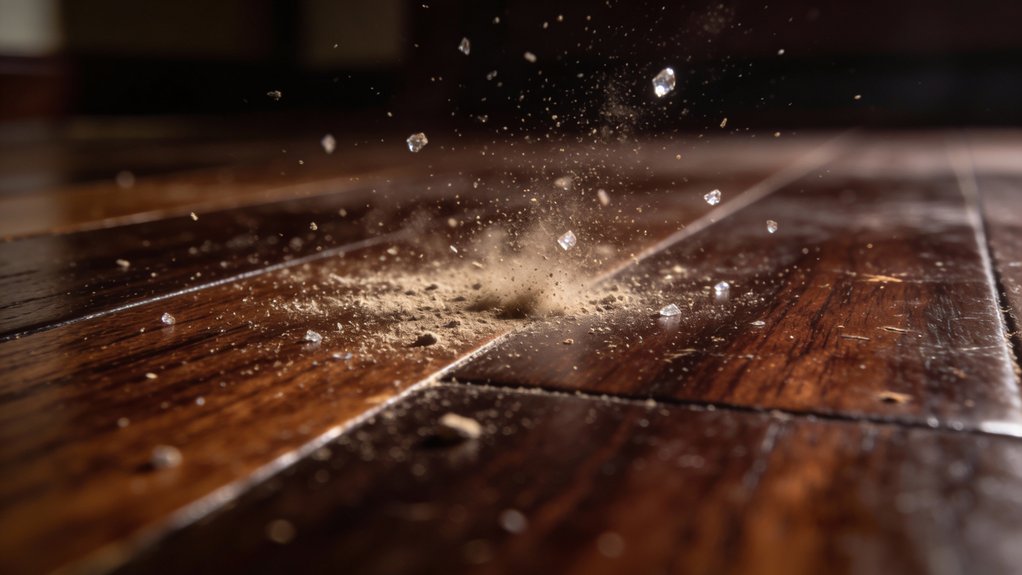
Although dark floors don’t actually collect more dirt than light ones, they’ve earned a reputation for being high-maintenance.
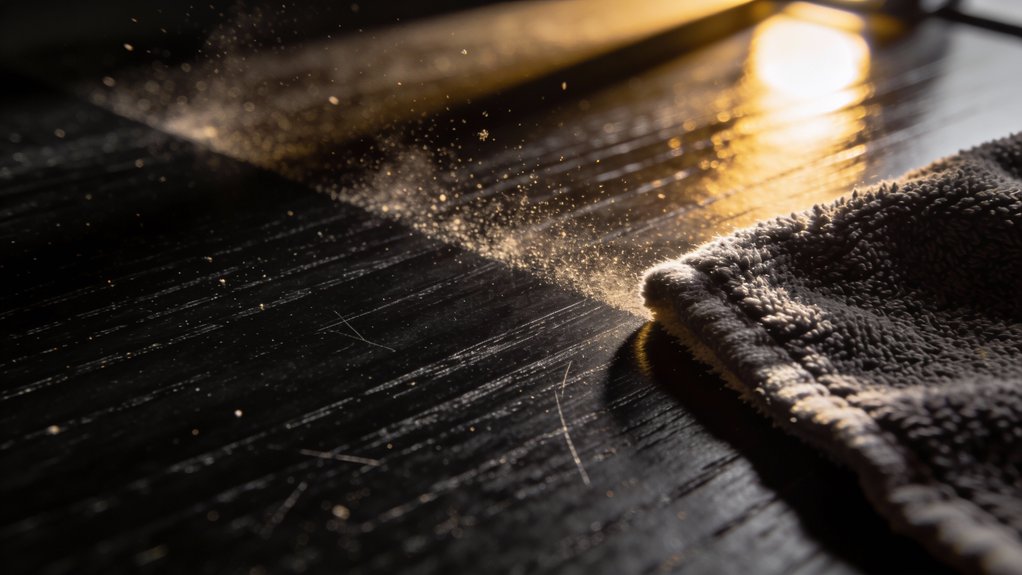
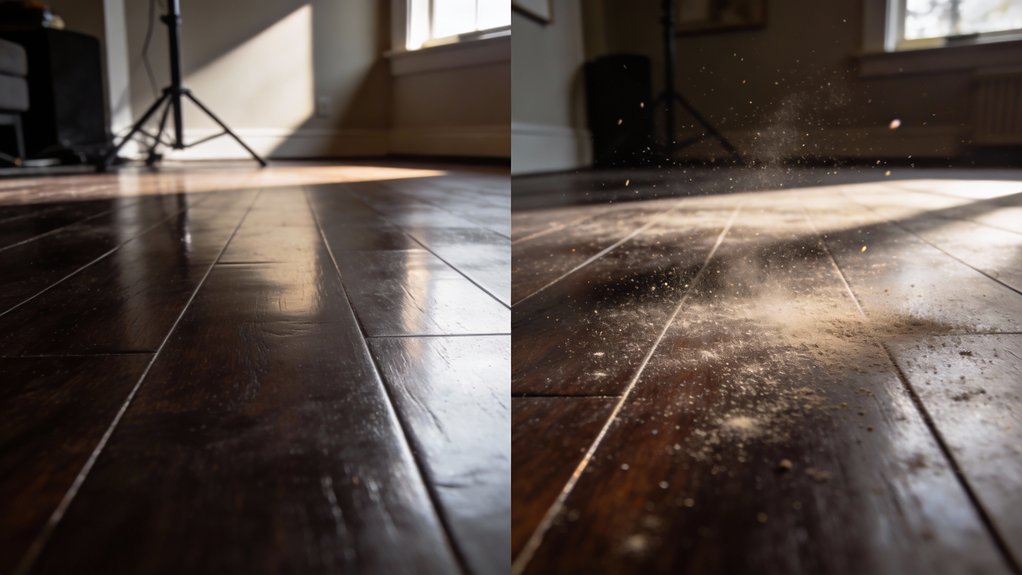
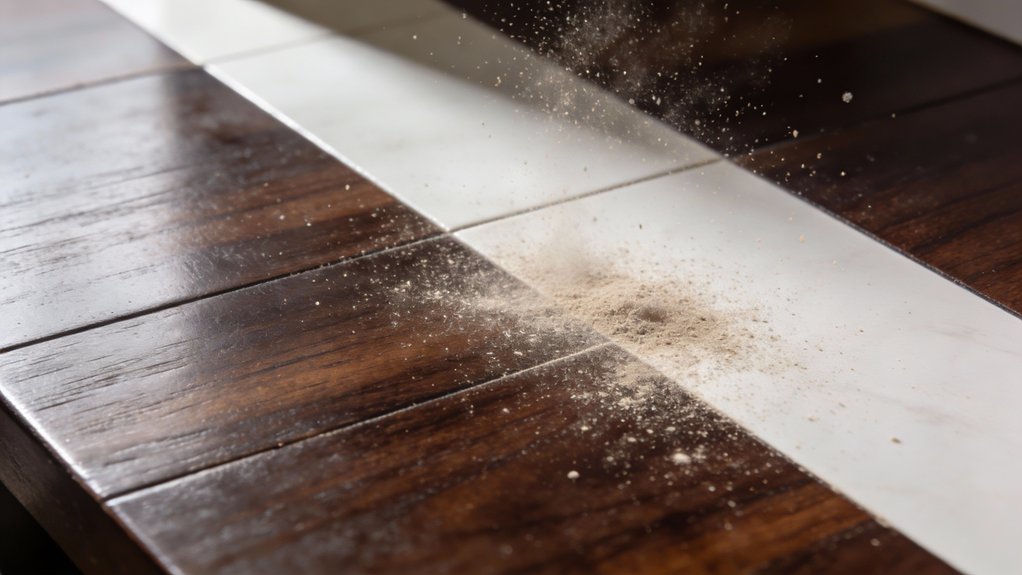
It’s mostly about what you see, not what’s really there. Light-colored dust, pet hair, and lint create sharp visual contrast against dark surfaces, making your floor look dirtier than it actually is.
In bright, side-lit rooms, raking light exaggerates every footprint and streak. You feel like you’re constantly cleaning, even when the floor is moderately clean.
These dark floor aesthetics amplify maintenance misconceptions.
Staged photos in design blogs show perfect conditions, reinforcing the myth that dark floors are impractical for real homes.
Myth 1: Dark Floors Are Always Harder to Keep Clean
Now let’s look at the real story behind dark floors and cleanliness.
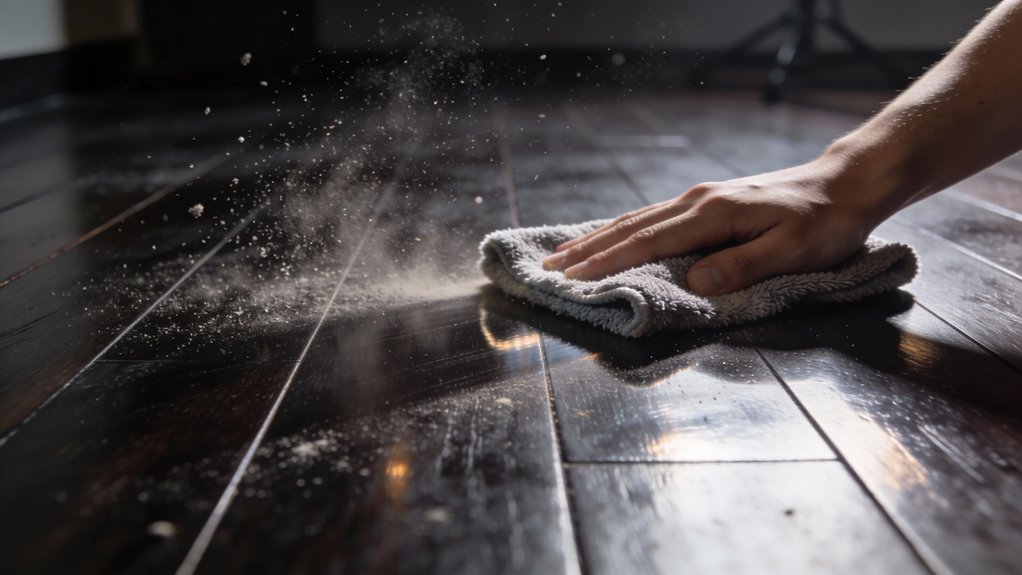
You’re not actually cleaning more, you’re just seeing dust differently. Light debris shows up clearly on dark surfaces, creating the illusion that they’re dirtier.
But here’s the truth: your cleaning techniques remain identical whether you’re vacuuming light or dark floors.
Material and finish matter far more than color. A sealed dark ceramic tile requires less effort than a textured pale plank that traps grit.
With basic prevention (entry mats, felt pads, regular dusting) dark floors feel no more demanding than lighter options.
Myth 2: Light Floors Are Effortless Compared to Dark Floors
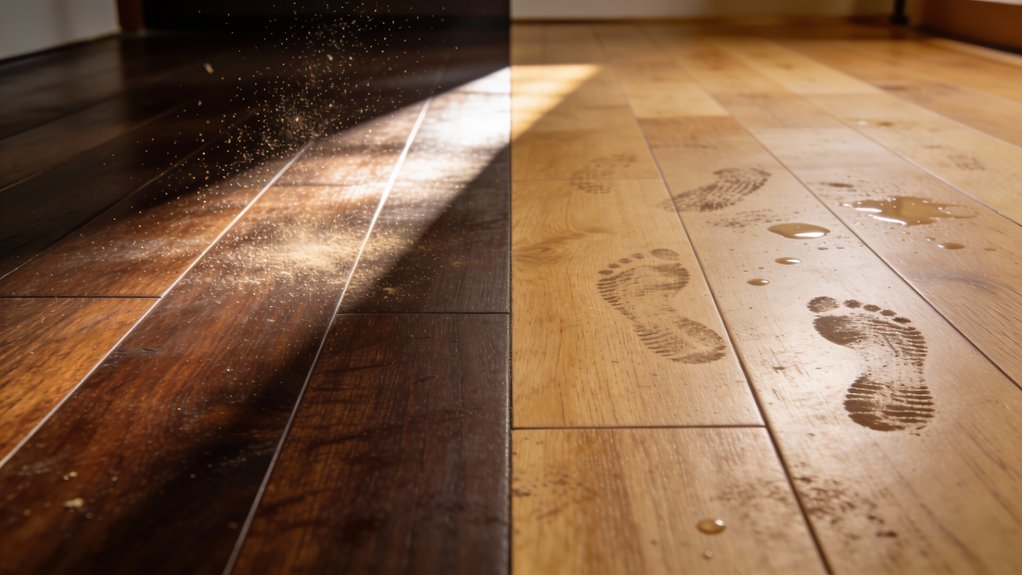
If you’ve heard that light floors require almost no maintenance, you’re buying into marketing magic rather than reality.
Dark pet hair and soil stand out sharply on pale wood, forcing constant spot cleaning. You’ll notice heel marks and traffic lanes once the finish wears, revealing wear that darker floors hide.
Light floor maintenance often gets delayed because dirt stays invisible, but this procrastination grinds grit into your finish over time.
That camouflaged dust accumulates silently, shortening your floor’s lifespan and eventually requiring expensive refinishing.
Dark floor visibility shows dirt clearly, but you’ll actually clean more consistently, protecting your investment longer than light floors demand.
What Dark Floors Actually Show (and Hide)
Dark floors reveal and conceal different things than you’d expect. Light-colored particles, dust, flour, lint, pet hair, show up prominently, especially when sunlight rakes across the surface at low angles.
However, darker materials like soil and small scuffs hide surprisingly well, which helps in busy kitchens and entryways. Visibility factors matter greatly here.
Scratches cut through stain to lighter wood underneath, appearing more dramatic than wear on naturally pale floors.
Your maintenance tips should account for this: textured finishes with visible grain and multi-tone variation break up dust and footprints better than flat, solid dark surfaces.
Choosing the Right Shade and Finish
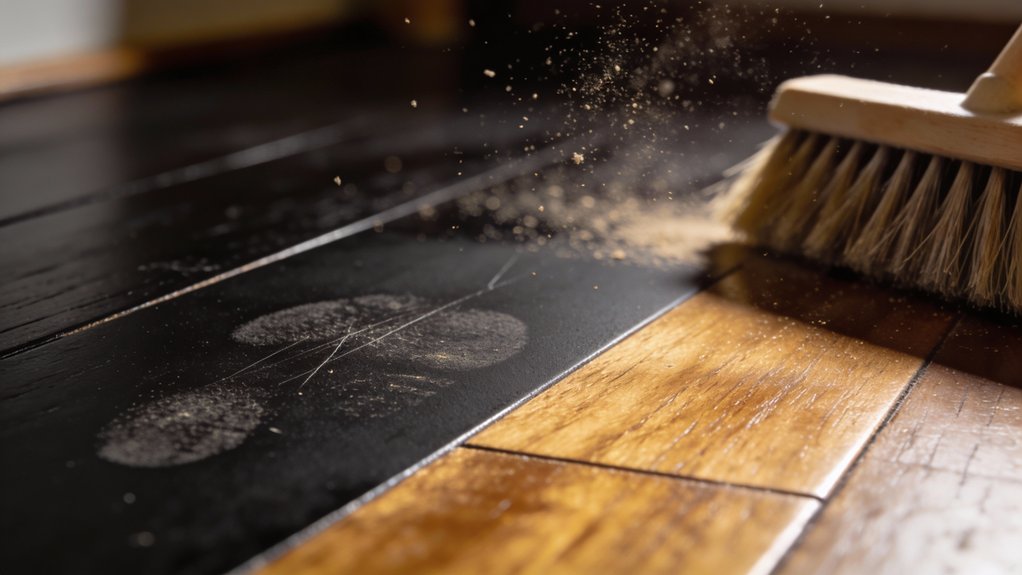
Once you’ve decided on dark floors, the shade and finish you pick make all the difference in how much you’ll actually enjoy them. Your shade selection matters tremendously.
Rich mid-tone browns forgive dust far better than near-black stains with glassy finishes. Textured surfaces, hand-scraped or wire-brushed, scatter light and hide fine scratches effectively.
For finish options, satin and matte sheens outperform gloss, which mirrors every streak and footprint. In bright homes with skylights, pair darker stains with lower sheen and visible grain.
You’ll notice the constant smudged appearance disappears. Quality urethane finishes let you refresh worn areas without sanding your entire house.
Daily and Weekly Cleaning Routine for Dark Floors
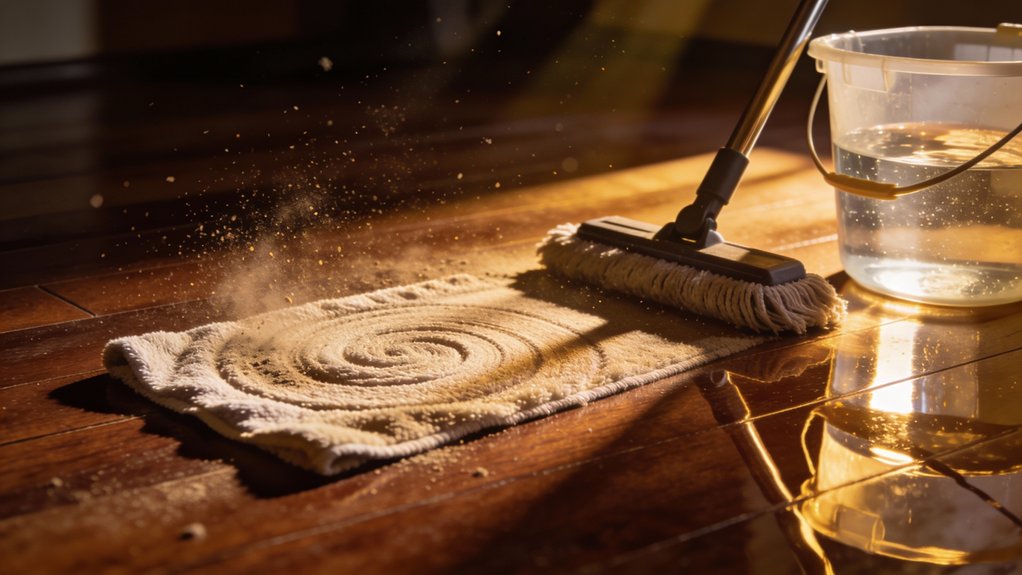
Three simple steps keep dark floors looking their best without overwhelming you.
Daily maintenance with a household wet & dry mops or soft-brush vacuum prevents light dust from accumulating visibly. You’ll spend just minutes removing debris before it settles.


Weekly or biweekly, use a damp mop with pH-neutral cleaner designed for your specific flooring type. This removes cloudy streaks and oily film that catch light.
Skip vinegar-water mixtures and steam, they damage dark finishes and create patchy appearance.
Your best cleaning tools? Entry mats, felt pads under furniture, and consistent habits.
These preventative measures reduce scratching and cut your actual cleaning time dramatically.
Design and Lifestyle Factors That Matter More Than Color
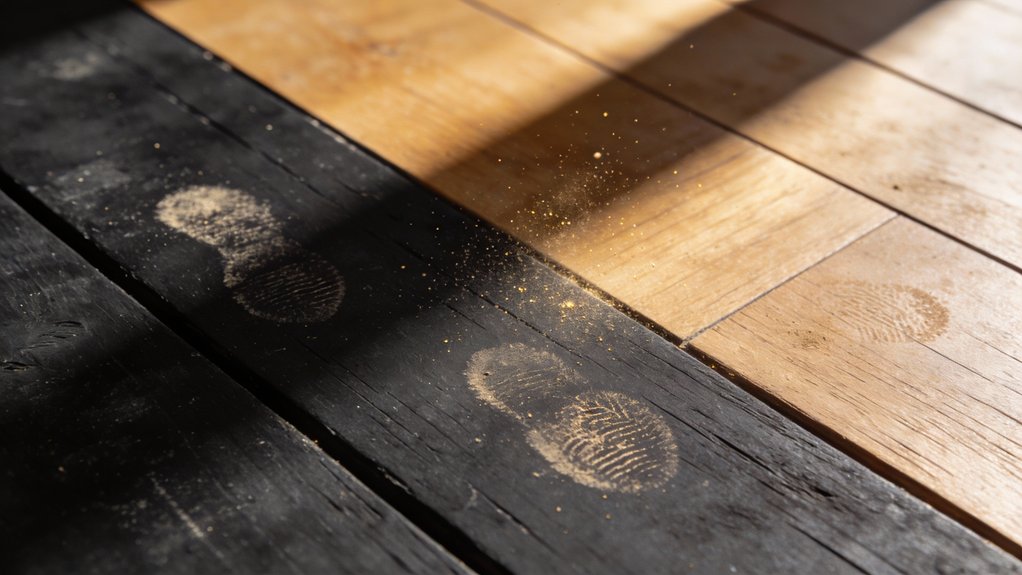
Before you decide whether dark floors work for your home, take a step back and consider your actual lifestyle. Your cleaning habits matter far more than floor color.
Do you wear shoes indoors? How many pets do you have? These factors shape your workload considerably.
Your floor materials also influence maintenance demands. Hardwood needs different care than laminate.
Room lighting and your décor’s overall palette affect perceived cleanliness too. Bright sunlight streaming through windows highlights dust everywhere.
A balanced color scheme between walls, furniture, and floors creates visual harmony that camouflages minor imperfections.
Ultimately, honest self-assessment guides better flooring choices.
When Dark Floors Are a Good (or Bad) Idea
So you’re drawn to dark floors, but they’re not right for every home.
Dark floor aesthetics work best when you appreciate polished, tailored spaces and commit to frequent light maintenance.
You’ll love them in open-plan areas with light walls and minimal floor clutter, where visual contrast sharpens your design.
Skip dark floors if you have multiple shedding pets, track in outdoor soil, or live in cramped north-facing rooms where glossy surfaces amplify smudges.
You’ll also want to reconsider if future renovations might require color changes.
Lighter starting points evolve more easily than attempting to shift from very dark later.
The Real Truth About Dark Floor Maintenance
Whether dark floors fit your home comes down to honest self-assessment, not marketing claims or design magazines.
You’ll succeed with dark floors when you match them to your actual lifestyle.
Consider your cleaning techniques and maintenance tips realistically.
Do you have pets tracking dust? Kids dropping crumbs? Dark floors reveal these things, which pushes you toward better habits, not harder work.
The grain character, finish quality, and sheen matter more than color alone.
You’ll enjoy rich, dramatic flooring for years when you choose based on how you genuinely live, not myths about impossible upkeep.
Conclusion
Dark floors aren’t the cleaning villains you’ve imagined. Yes, you’ll spot fingerprints and water spots more easily, but dust? It hides beautifully in darker tones.
You’ll actually spend less time obsessing over minor imperfections than light floor owners do. The real secret isn’t choosing lighter shades: it’s matching your flooring to your lifestyle and committing to a simple routine.
Dark floors work perfectly for you when you’ve got realistic expectations.