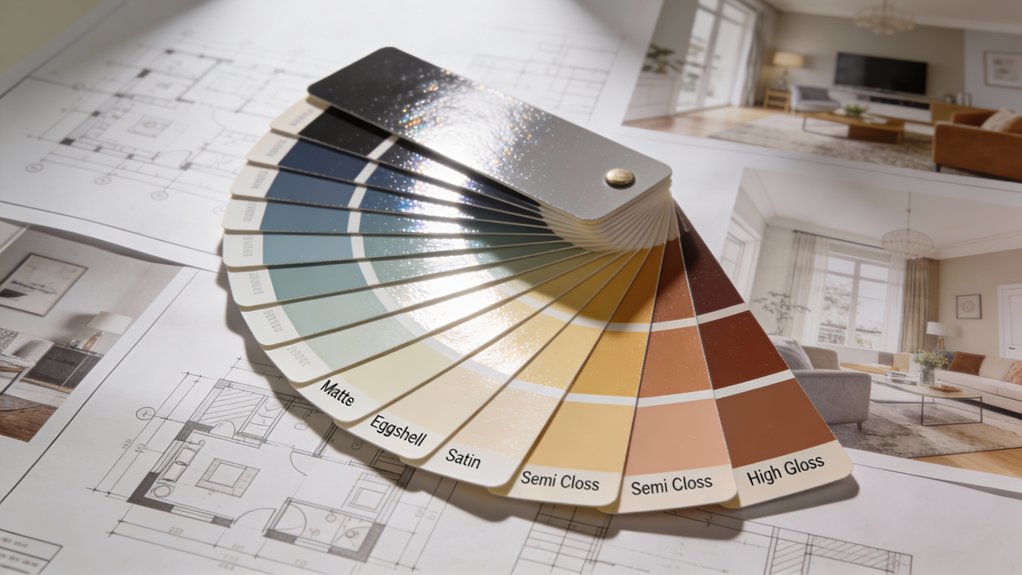
What Paint Sheen Should You Use? A Practical Room‑by‑Room Guide
You’ll want to match your sheen to how you use each space. Kitchens and bathrooms need semi-gloss for moisture and cleanup. Family rooms and high-traffic areas work best with satin or eggshell for durability.
Bedrooms prefer flat or matte for coziness. With kids or pets, bump up one sheen level for easier cleaning, think eggshell instead of matte. Ceilings stay flat to hide texture.
Trim goes shinier than walls for visual pop and better maintenance. Wall condition matters too; older homes benefit from dropping a sheen level to hide imperfections. The specifics of your situation will determine your best choice.
1. Paint Sheen Basics: Flat to Gloss
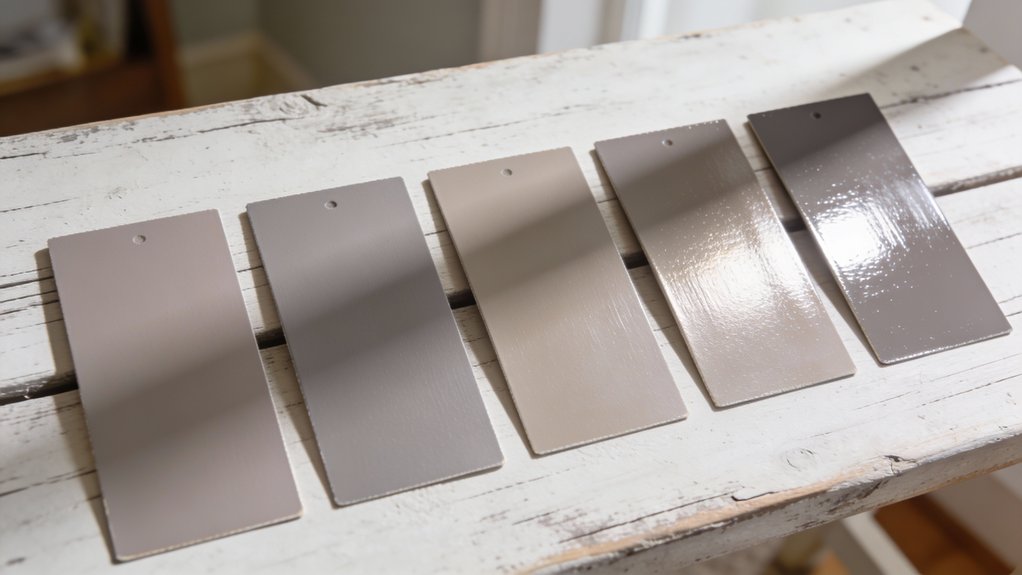
When you’re standing in the paint aisle, you’ll notice that cans are labeled with different sheens: flat, matte, eggshell, satin, semi-gloss, and gloss.
Each sheen reflects light differently, affecting how your color vibrancy appears and how your walls feel.
- Flat sheens absorb light, hiding surface texture imperfections but resisting cleaning.
- Gloss sheens bounce light around, revealing every flaw while offering easy maintenance.
- Between these extremes, eggshell, satin, and semi-gloss offer balance.
A sheen comparison chart helps clarify where each falls.
Understanding lighting effects and your maintenance considerations guides smart choices for every room.
2. Quick Paint Sheen Cheat Sheet (Read This First)
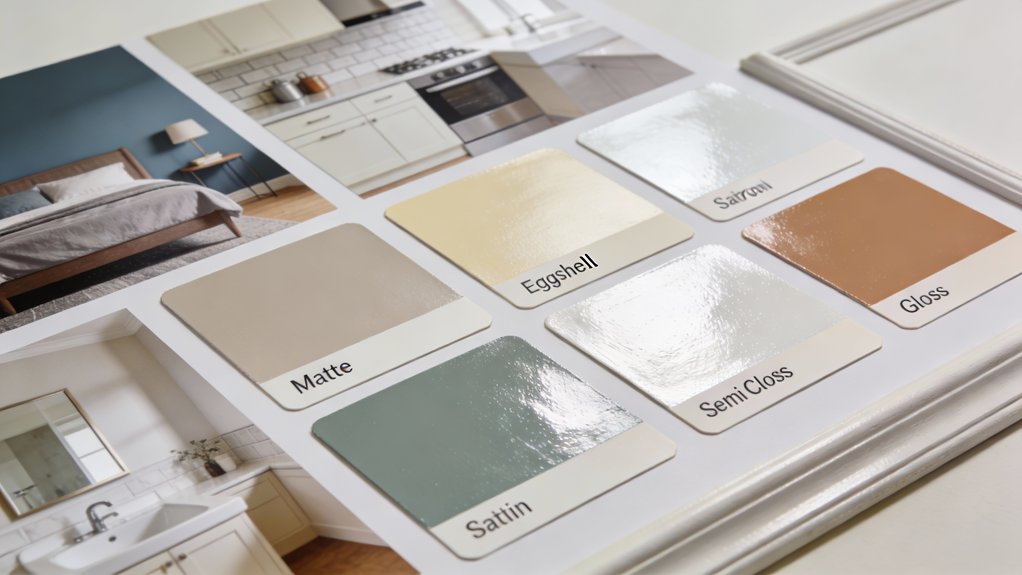
If you’re pressed for time, here’s what you need to know: grab the right sheen for each room, and you’ll save yourself headaches later.
- Kitchens and bathrooms need semi-gloss for moisture resistance and easy cleaning.
- Family rooms and hallways work best with satin’s soft sheen and durability.
- Living and dining rooms benefit from eggshell’s balanced coverage.
- Adult bedrooms call for flat or matte finishes that feel cozy.
Reserve high-gloss for trim and cabinets only.
These paint sheen types directly impact both maintenance tips and color impact.
The right choosing finishes strategy means less scrubbing and longer-lasting walls.
3. Room‑by‑Room Sheen Guide
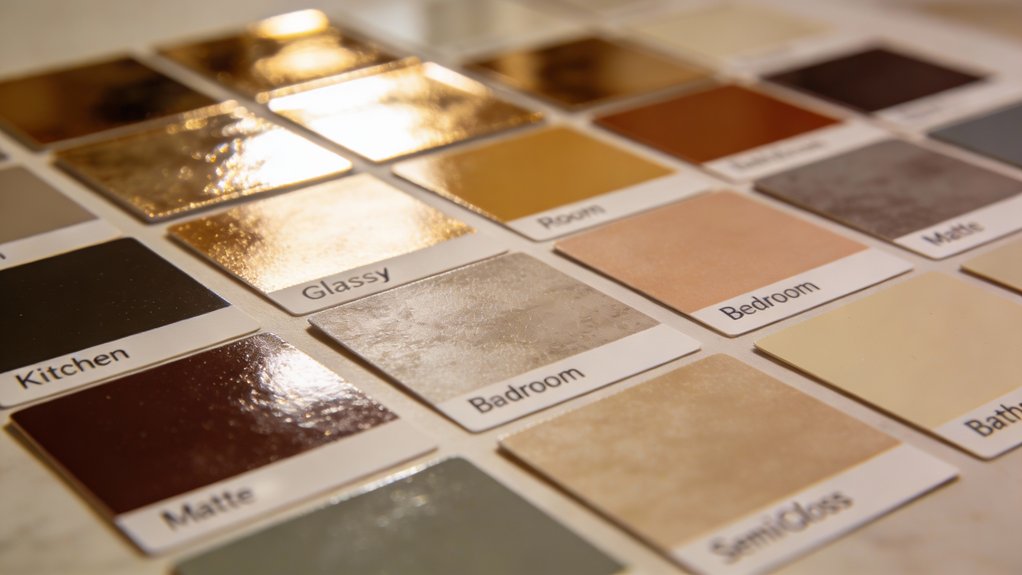
You’ll want to match your paint sheen to each room’s specific demands, since different spaces have different exposure levels and purposes.
Living rooms need one approach, while bathrooms and kitchens require something entirely different due to moisture and traffic.
Let’s break down the best sheen choices for every major room in your home.
Living Rooms and Family Rooms
What sheen works best for living room aesthetics?
Eggshell or low-sheen matte balances soft, upscale living room aesthetics with practical wipeability. You’ll appreciate how these sheens handle fingerprints and minor scuffs without looking institutional.
In high-traffic family rooms, consider stepping up to eggshell or satin for better family room durability. Kids, pets, and frequent entertaining demand surfaces you can actually clean.
TV-heavy entertainment spaces particularly benefit from lower sheen. Higher gloss creates distracting screen glare and highlights roller marks under certain lighting.
You’re creating an inviting gathering spot, not a showroom.
Sheen color impact matters too; matte finishes feel cozier and more grounded than glossy alternatives.
Bedrooms and Nurseries
Bedrooms serve a different purpose than living spaces, and that difference should show in your paint choice. For primary bedrooms, matte or eggshell sheens create that calm, cocoon-like feel you’re after.
These finishes hide wall imperfections beautifully under softer lighting and support your bedroom color schemes perfectly.
In kids’ rooms and nurseries, choose washable matte or eggshell. Satin works too if walls take abuse from bumps and handprints.
These paint durability factors matter when you’re dealing with crayon marks.
For nurseries specifically, low-VOC options deserve consideration.
Wall texture considerations and lighting effects both influence how your chosen sheen performs, so test samples first.
Hallways, Entryways and Stairs
Since hallways, entryways, and stairwells get constant traffic and contact, they’re some of your home’s hardest-working walls. Hands, bags, and shoes brush these spaces daily, creating wear patterns that require durable protection.
Choose eggshell or satin for superior stain resistance and easier cleaning. These sheens handle scuffs and smudges better than flat finishes. Avoid high-gloss in tight corridors, as it exaggerates dings and uneven drywall under side lighting.
Focus prep work around light switches and stair railings where grime accumulates fastest. Pair your durable sheen choice with quality primer and meticulous surface preparation.
This combination guarantees your hallway decor, entryway lighting, and stairwell safety investments stay looking fresh longer.
Kitchens and Dining Areas
Kitchen walls take a beating from grease, steam, and constant wiping, which is why you’ll want a finish that can handle the abuse. Satin or tough, washable eggshell provides your baseline choice for kitchen color and sheen selection.
Near stoves and sinks, consider semi-gloss or specialty kitchen products for superior scrub-ability in high splash areas. Yes, you’ll see more shine, but cleanup becomes effortless.
In open plan layouts, match your dining area’s sheen to kitchen walls. This creates open plan continuity and guarantees your connected space reads as one cohesive volume rather than patchy changes.
Durable finishes protect your investment long-term.
Bathrooms, Laundry Rooms and Utility Spaces
Most bathrooms face a constant battle with moisture.
You’ll want satin or semi-gloss bathroom paint for walls to handle humidity and frequent cleaning. These sheens resist condensation and prevent mildew prevention better than flat finishes.
Full baths need this sheen durability more than powder rooms do. Areas around tubs, showers, and utility sinks are especially vulnerable to peeling and stains.
Your laundry room faces similar challenges with steam and splashing.
Skip cheaper, lower-sheen options in these spaces, they’ll fail quickly.
Investing in proper moisture resistance now saves you from repainting in eighteen months.
Home Offices and Flex Rooms
Your home office or flex room has unique lighting challenges that flat paint can’t handle. Matte or eggshell sheen reduces glare on monitors and keeps video-call backgrounds from looking shiny or patchy under artificial lighting.
Since flex rooms often double as guest rooms, hobby spaces, or kids’ play zones, a washable eggshell offers the best mix of appearance and practicality.
Consider how often furniture gets rearranged or bumped in these spaces. That movement can favor slightly more durable sheens on walls that take the hits.
Your sheen selection directly supports both paint durability and practical aesthetics.
4. What About Ceilings, Trim and Doors?
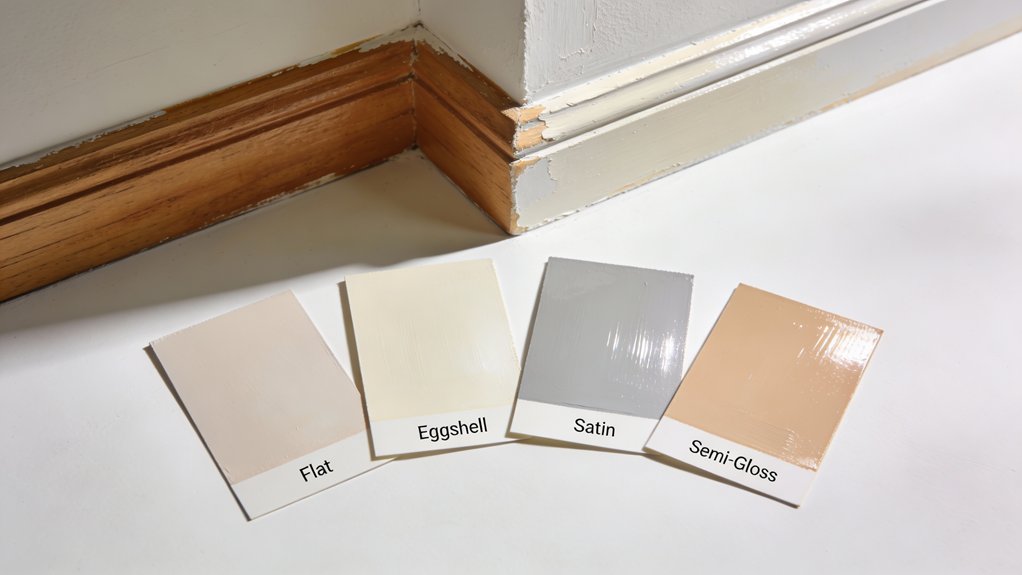
You’ll want to treat your ceilings differently from your walls. They’re a category all their own.
For trim and interior doors, you’re actually going to bump up the sheen level compared to what you used on the walls around them.
This approach keeps your ceilings looking clean while giving your architectural details a subtle pop of polish.
Ceilings: Keep It Simple
When it comes to ceilings, flat or matte finishes are your best bet. These ceiling paint options provide light absorption effects that create a soft, uniform appearance throughout your room.
You’ll appreciate how flat finishes minimize texture visibility reduction, hiding imperfections and dust that would otherwise stand out under bright lighting.
The matte surface won’t reflect light back at you, keeping things subtle and restful.
Color choice impact matters too. Lighter shades make rooms feel more spacious, while darker tones add coziness.
Stick with flat finishes on ceilings, and you’re investing in a clean, polished look that lasts.
Trim and Interior Doors: Go a Sheen Up
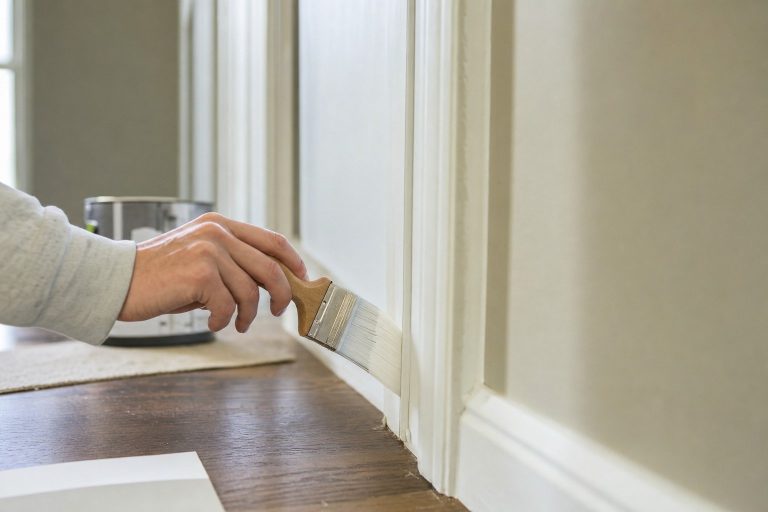
Unlike ceilings, trim and interior doors benefit from a sheen boost, typically satin or semi-gloss.
These glossier finishes handle constant contact, cleaning, and impacts from vacuums or toys far better than flat paint.
A slightly higher sheen on baseboards, casings, and doors makes them stand out crisply against your walls, creating architectural detailing that feels intentional and finished.
You can use the same color on walls and trim but vary the sheen; the glossier areas will appear slightly lighter or brighter.
This subtle contrast through sheen impact visuals elevates your entire room without requiring multiple paint colors.
5. How to Adjust for Kids, Pets and Imperfect Walls (In 3 Decisions)
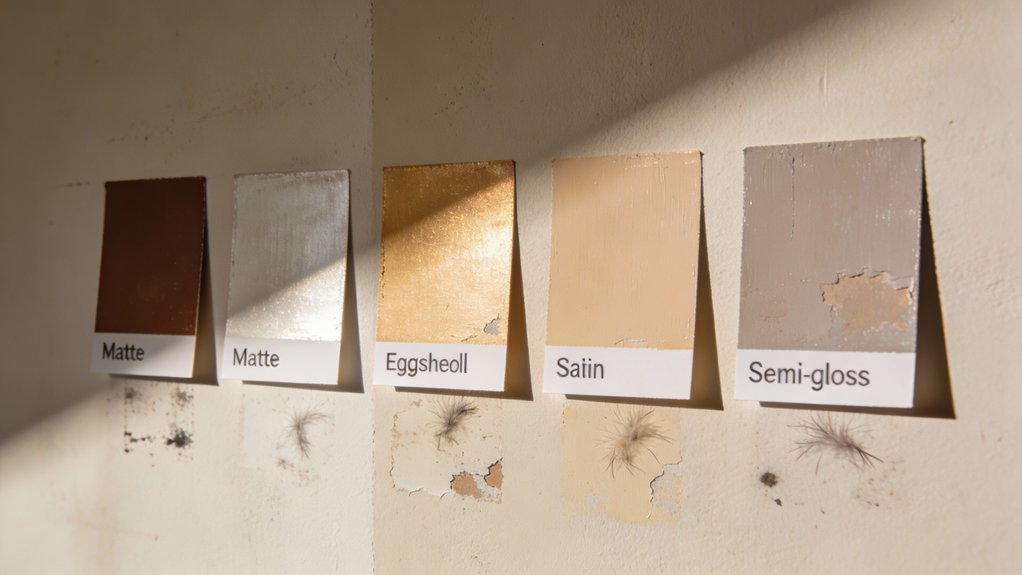
The recommendations in the cheat sheet above work great for ideal conditions, but real homes aren’t ideal.
That’s where this adjustment guide comes in. You’ve got three main sheen adjustments to evaluate.
- First, if kids or pets live with you, move one step shinier in busy areas. Matte becomes eggshell; eggshell becomes satin. This extra durability handles scuffs and stains way better.
- Second, for older homes with textured or imperfect walls, drop one sheen level on long walls to hide roller laps and patches.
- Third, balance practicality against design choices based on how you use each space.
6. FAQ: Fast Answers to Common Sheen Questions
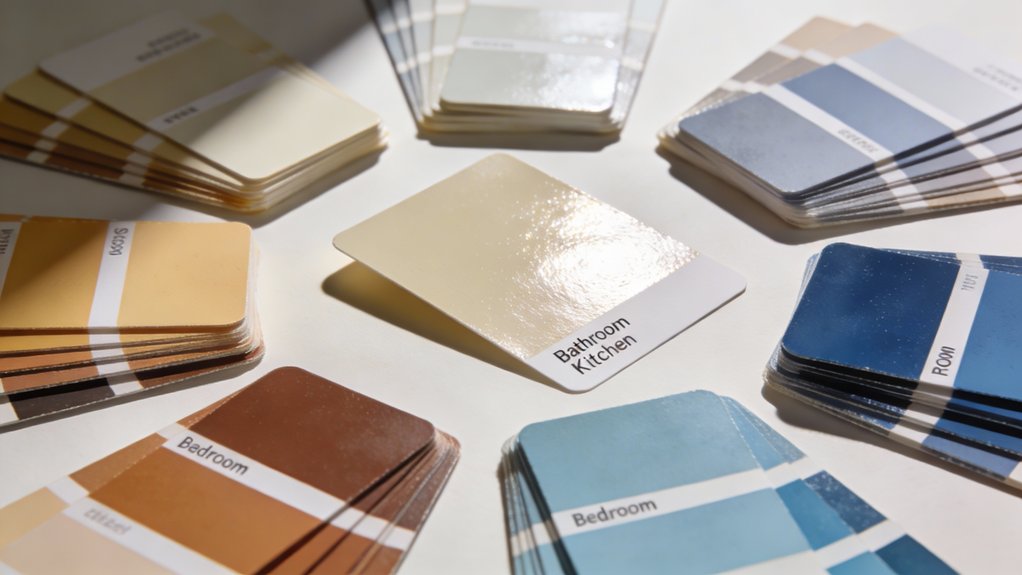
Got questions about sheen choices that don’t fit neatly into the room-by-room guide?
- You can use the same sheen throughout your house, but trim should go one sheen level higher for visual separation. Mixing sheens in one room works fine: walls in eggshell, trim in semi-gloss creates intentional contrast.
- Matte isn’t wrong for kitchens if you choose washable formulas, though satin forgives cleaning habits better.
- Textured walls? Higher sheens highlight imperfections, so stick with flat or eggshell.
- Lighting effects matter too: glossy surfaces reflect light and brighten spaces, while matte absorbs it.
These texture considerations and color combinations guide your sheen selection confidently.
The Bottom Line
You might think picking one sheen saves money, but mismatched finishes actually cost more when you repaint problem areas. The right sheen for each room prevents peeling, staining, and durability issues.
You’re investing in longevity, not just aesthetics. Follow this guide’s room-by-room recommendations, adjust for your household’s wear patterns, and you’ll nail the perfect finish every time.
Your walls will look professionally done and hold up for years.