What Type of Paint to Use on Kitchen Cabinets: Revamp Your Kitchen
Kitchen cabinets take more punishment than almost any other surface in your home. Grease, moisture, repeated touching, and constant door-closing add up fast.
That means the paint you choose here matters more than it does on walls. The wrong product peels, chips, and looks worn within a year.
Cabinets take daily abuse, so paint choice matters more here than anywhere else.
Short answer: A waterborne alkyd enamel is the best paint for kitchen cabinets. It delivers oil-paint hardness with low VOCs and easy water cleanup. A 100 percent acrylic cabinet enamel is the easier runner-up and works well for most DIYers. Never use regular wall paint on cabinets. For finish, satin is the go-to sheen.
The best paint types for kitchen cabinets
| Paint type | Best for | Watch out for |
|---|---|---|
| Waterborne alkyd enamel | Maximum durability, white cabinets, professional results | Longer open time, slightly slower to sand between coats |
| Acrylic cabinet enamel | DIY-friendly, faster recoat, flexible finish | Not quite as hard as a top waterborne alkyd |
| Oil-based alkyd | Very hard finish on dark cabinets | Yellows over time, high VOCs, slow dry |
| Chalk paint | Decorative or furniture projects | Must topcoat for any durability; porous on its own |
Waterborne alkyd (best overall)
Waterborne alkyd enamel gives you the hardness of oil paint without most of the downsides. It self-levels well, which means fewer brush marks, and it cleans up with water.
Recoat time runs about 4 to 6 hours. It does not yellow over time, which makes it the right call for white or light-colored cabinets. Benjamin Moore Advance and Sherwin-Williams Emerald Urethane Trim Enamel are two well-known examples.
Acrylic cabinet enamel
A 100 percent acrylic cabinet enamel dries faster and is more forgiving to apply than waterborne alkyd. It is also more flexible, so it handles minor wood movement without cracking.
It is usually not quite as hard as a top-tier waterborne alkyd, but for most home kitchens the difference is minor. This is the easiest option for a first-time cabinet painter.
Oil-based alkyd
Traditional oil-based alkyd dries to a very hard finish. The trade-offs are real, though: high VOCs, long dry time, and a tendency to yellow noticeably over the years.
Yellowing is a serious problem on white or cream cabinets. Most painters have moved to waterborne alkyd for the same hardness without the drawbacks.
Chalk paint
Chalk paint is porous on its own and needs a protective topcoat to hold up at all. The topcoat becomes the durable layer, not the chalk paint underneath.
It is better suited to decorative furniture projects than to a kitchen that gets used every day.
What to avoid
Regular wall paint is not built for cabinets and will fail quickly. Even a premium interior wall paint is made to stay flexible and touch-dry fast, not to hold up against constant gripping, slamming, and cleaning.
The edges of cabinet doors are the first place you will see it fail. Chips appear there within months, and the damage only spreads from there.
No amount of extra coats makes wall paint a cabinet paint.
Use a product designed for the job.
What finish (sheen) to use
Satin is the sweet spot for kitchen cabinets. It is wipeable, durable, and forgiving enough to hide minor surface flaws that a glossier sheen would put on display.
Here is how the common sheen levels stack up for cabinets:
- Satin: best all-around choice. Durable, easy to clean, hides imperfections.
- Semi-gloss: a solid option if you want a slightly more washable surface. Shows flaws more than satin.
- Flat or matte: not cleanable. Grease and fingerprints will not come off reliably. Avoid on cabinets.
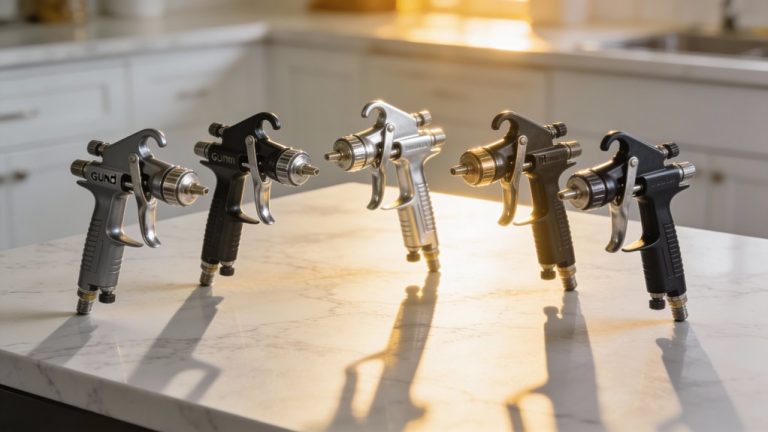
- High-gloss: very washable but unforgiving. Every brush mark and grain line shows. Best left to pros with spray gear.
The Bottom Line
- Choose waterborne alkyd enamel when you want the hardest, most professional result, especially on white or light cabinets where yellowing would show.
- Choose 100 percent acrylic cabinet enamel when you want a DIY-friendly option that still performs well and is faster to work with between coats.
Related reading: Benjamin Moore Advance vs. Aura, Advance vs. Sherwin-Williams Emerald, and How to Make Oak Cabinets Look Modern.