What Color Hardware Looks Best With Oak Cabinets?
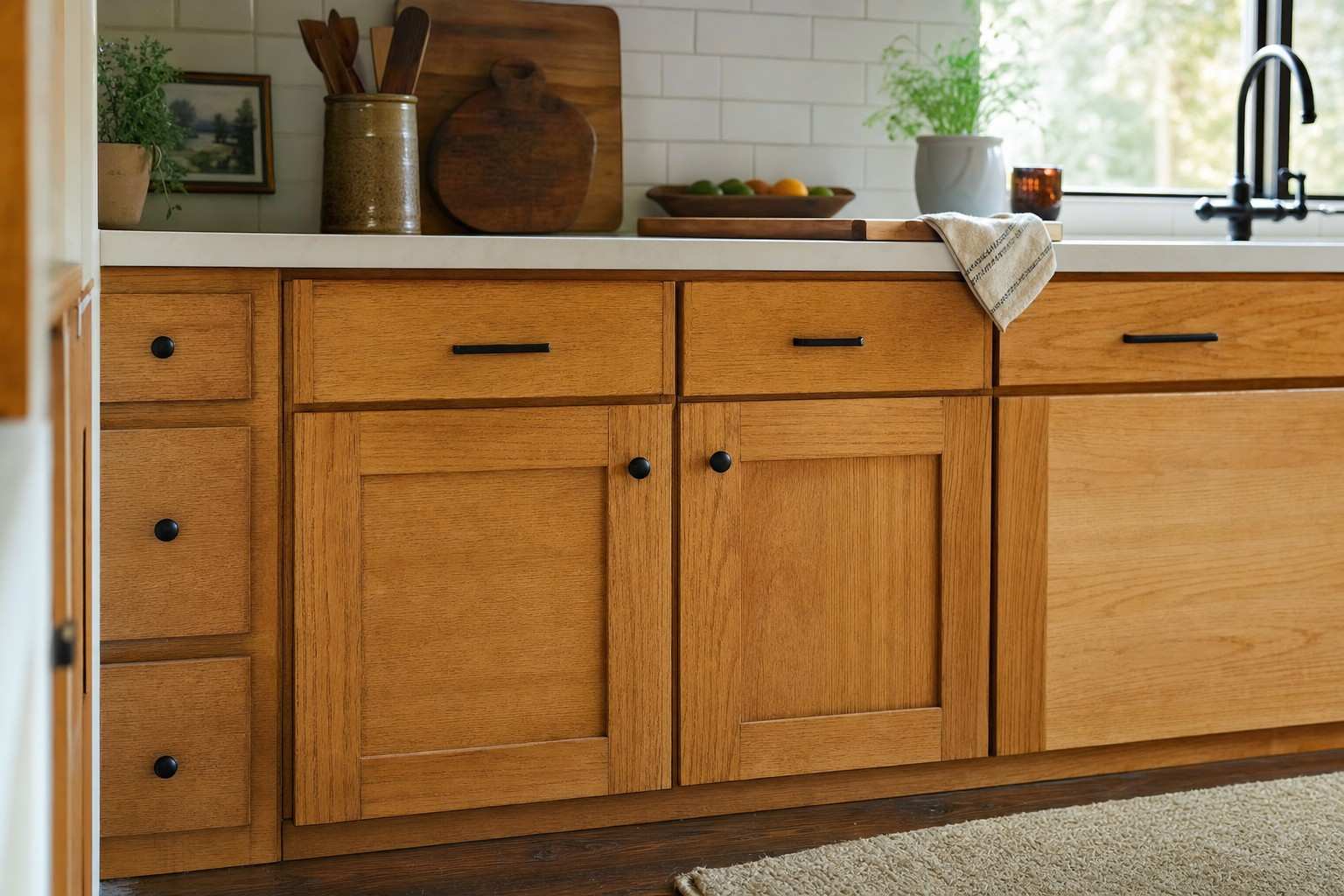
Oak cabinets carry a strong yellow to orange undertone.
It never fully goes away, no matter how the room is lit.
Hardware is the fastest, cheapest way to change how that undertone reads. A few new knobs and pulls, and the whole kitchen shifts.
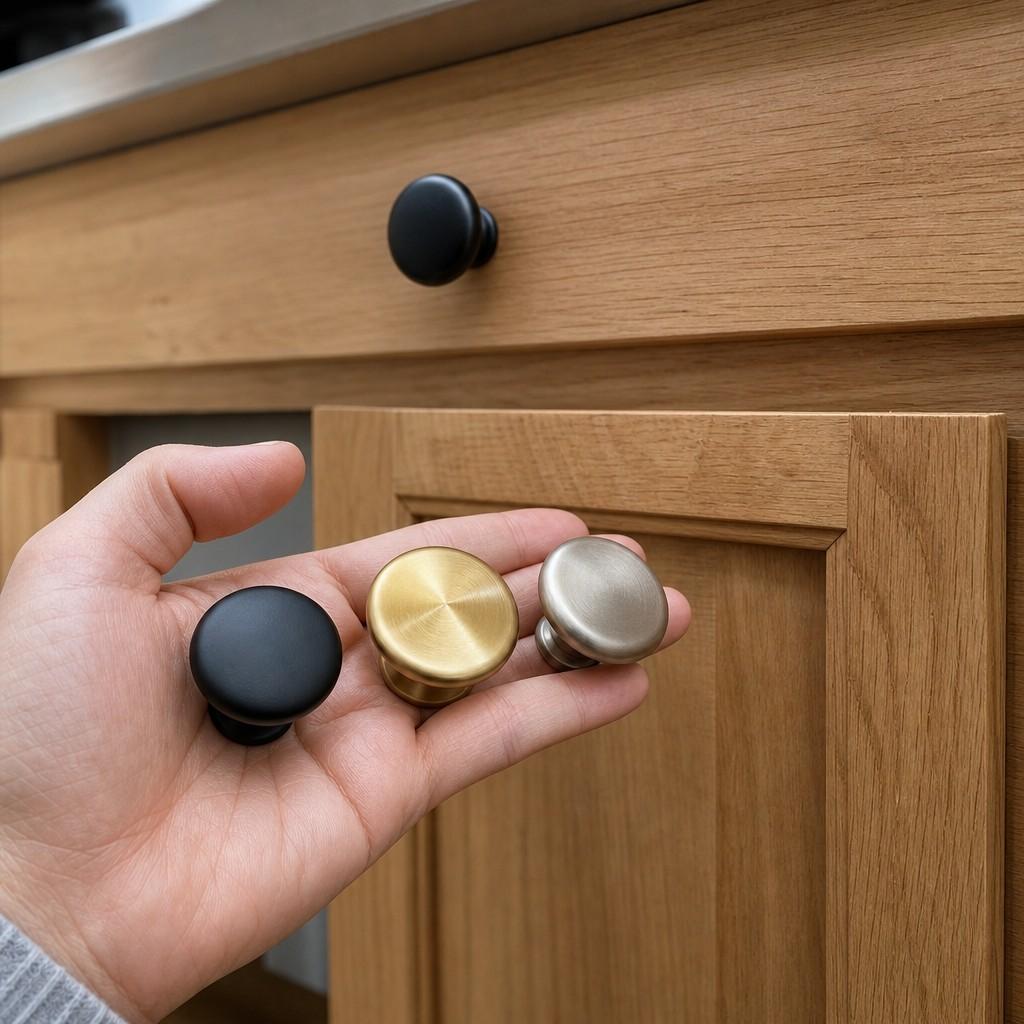
Short answer: matte black gives oak the strongest, cleanest contrast. It is the safest modern pick.
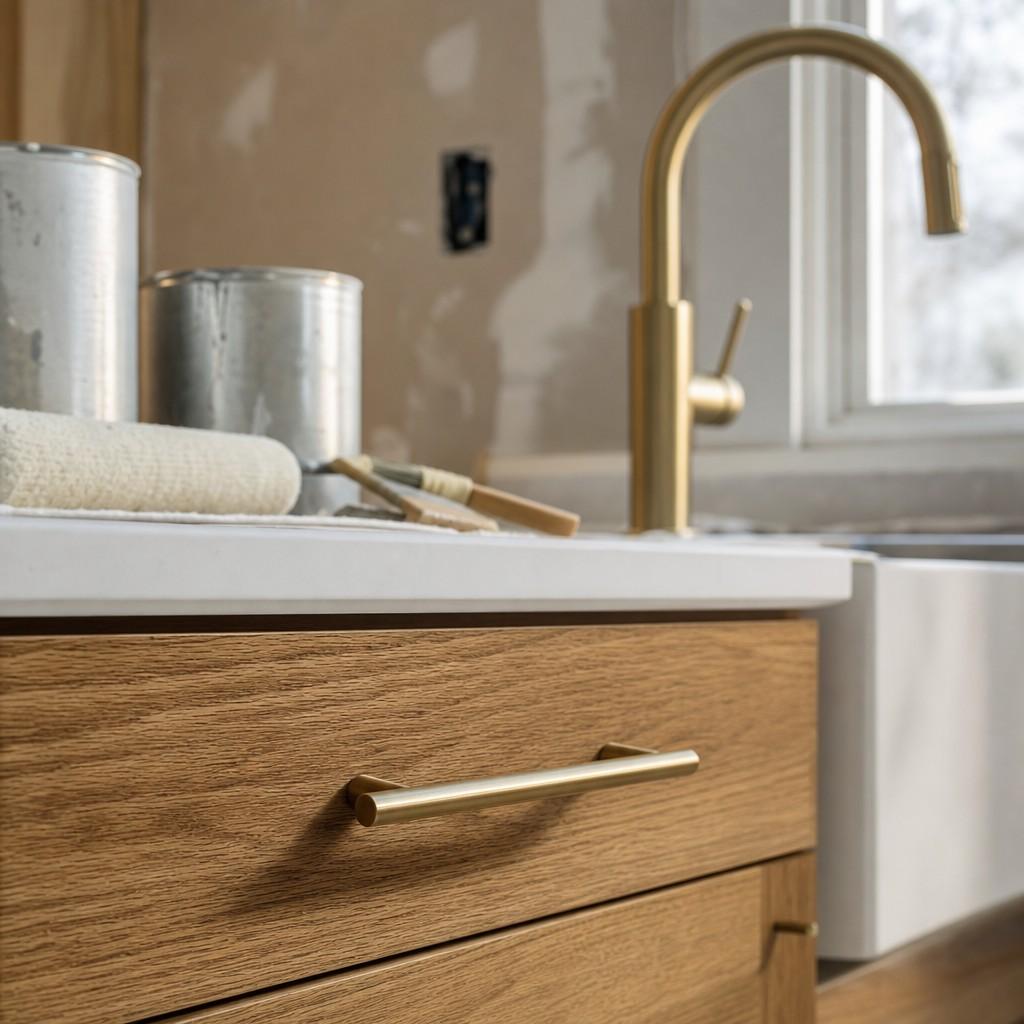
Brushed brass or warm gold blends with oak’s own undertone for a softer, cohesive look. Brushed nickel and pewter work as a cooler middle ground.
Oil-rubbed bronze splits the difference between brown and black.
Skip polished chrome and shiny silver. Their glare fights the wood’s warmth instead of settling it.
Why the undertone drives the choice
Oak is not a neutral wood, and no hardware finish simply ignores that.
Its grain carries real orange. That orange gets stronger under warm kitchen lighting.
A hardware finish either pushes against that orange or leans into it.
Cool, high-shine metals create contrast. Warm metals create harmony.
Matte and brushed finishes, in either temperature, read calmer than anything polished or reflective.
Which hardware finish fits the look you want
| Look you want | Hardware finish | Why it works |
|---|---|---|
| Bold, modern contrast | Matte black | Strongest break from oak’s warmth; hides fingerprints; reads current in any style |
| Warm, cohesive, traditional | Brushed brass or warm gold | Matches oak’s own undertone instead of fighting it; feels intentional, not clashing |
| Soft, neutral, transitional | Brushed nickel or pewter | Cools the room without the glare of polished chrome; pairs with most countertops |
| Vintage, farmhouse | Oil-rubbed bronze | Sits between brown and black; shifts warmer or cooler depending on the light |
Every finish below fits at least one of those goals. None of them is objectively correct.
The room’s other metals, and the look you are chasing, decide it.
Matte black
Matte black is the single most reliable choice for oak.
A flat black finish reads as modern and deliberate, and it hides everyday grease and fingerprints better than any lighter finish.
That practicality is part of why it has become the default swap for dated oak kitchens.
It also does not compete with other metals in the room. Black pairs cleanly with stainless appliances, black fixtures, or warm brass accents elsewhere.
Brushed nickel and pewter
Brushed nickel and pewter are the cool-toned options that still feel calm next to oak.
The brushed texture kills the glare that makes polished silver look harsh.
Pewter leans slightly gray and warmer than nickel. That makes it a gentler transition if the rest of the kitchen is still fairly traditional.
Avoid the polished or chrome version of either finish. A high-shine silver reflects too much light next to warm wood, and the contrast reads busy instead of clean.
Brass and gold tones
Warm brass or a soft gold tone works with oak instead of against it. Both sit on the warm side of the color wheel.
Choose a brushed or satin brass, not a bright polished gold.
The muted version reads current. The high-shine version reads dated, the same way old oak kitchens do.
This is the pairing to reach for if the goal is a warm, pulled-together kitchen rather than a sharp contrast.
It is also the easiest finish to get wrong by going too shiny.
Oil-rubbed bronze
Oil-rubbed bronze sits between brown and black. Its exact look shifts with the light in the room.
Under bright light it can read as a warm dark bronze. In dimmer light it edges close to black.
That shift is a feature, not a flaw, on oak. It softens the transition instead of forcing a hard line between wood and metal.
Oil-rubbed bronze is the classic pairing for a traditional or farmhouse-style oak kitchen.
It has stayed a safe choice for a reason.
What to avoid
A few finishes work against oak more often than they work with it.
- Polished chrome or bright silver. Too reflective next to a warm, matte wood grain. The shine draws the eye and highlights the contrast in the wrong way.
- Pale gold or brushed champagne close to oak’s own color. A finish that nearly matches the wood tone tends to disappear instead of standing out.
- Mixing three or more finishes on one set of cabinets. One or two finishes, chosen on purpose, read as a decision. Four finishes read as leftovers from different projects.
Practical tips before you buy
Match the new hardware to the room’s other fixed metals, not just the cabinets.
If the faucet and light fixtures are already brushed nickel, matte black hardware still works. But pulling one finish through faucet, lighting, and hardware gives the room a more finished look.
Buy one knob and one pull before ordering a full set.
Hold both against the cabinet in daylight and under the kitchen’s actual evening lighting. A finish that looks right under one light can shift once it is on the door.
Knobs work well on doors. Pulls work better on drawers, especially wider ones. A pull gives your whole hand something to grip instead of one fingertip.
Many kitchens mix both: knobs on doors, pulls on drawers, in the same finish.
A hardware swap alone will not always fully modernize the kitchen. Pairing it with a few no-paint updates to the rest of the kitchen usually closes the gap.
For a bigger reset, the right wall color for honey oak matters just as much as the hardware finish.
The Bottom Line
- Choose matte black when you want the strongest, most modern contrast against oak’s warm grain.
- Choose brushed brass, nickel, pewter, or oil-rubbed bronze when you want a softer, more traditional pairing that works with the wood instead of against it.
Related reading: How to Make Oak Kitchen Cabinets Look Modern and What Paint Color Goes With Honey Oak Cabinets.