Best Deglosser for Kitchen Cabinets (No Sanding)
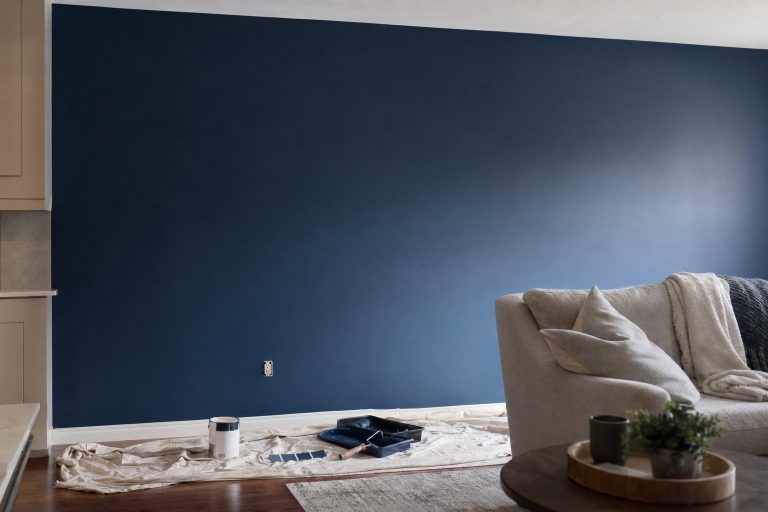
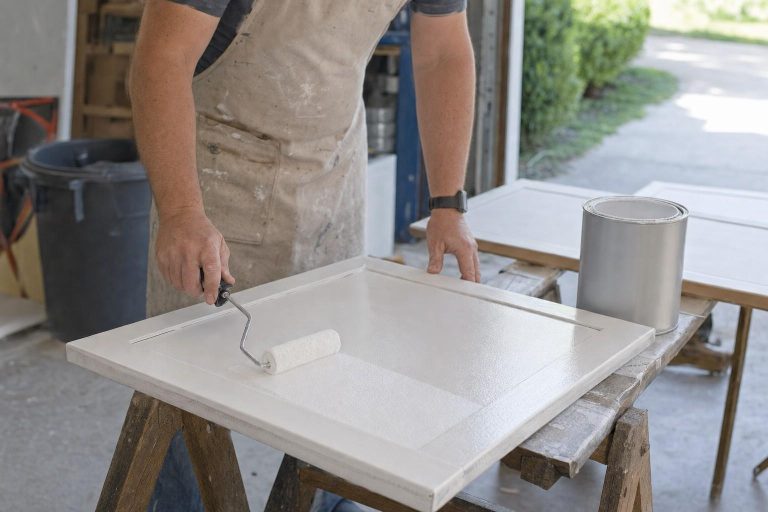
Repainting kitchen cabinets means one job almost everybody dreads: sanding every door and drawer front by hand.
A deglosser skips that step. It chemically dulls the old sheen so primer can grip, with no sandpaper involved.
The Klean Strip Easy Liquid Sander Deglosser is the best overall pick, the classic “liquid sandpaper” most DIYers reach for first.
Three other picks below fit specific situations: a greasy kitchen, a heavier grime job, and a faster no-rinse workflow.
Reader-supported: if you buy through links on this page we may earn a small commission, at no extra cost to you.
Klean Strip Easy Liquid Sander Deglosser (best overall)
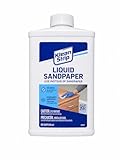
This is the deglosser most cabinet painters already know by name.
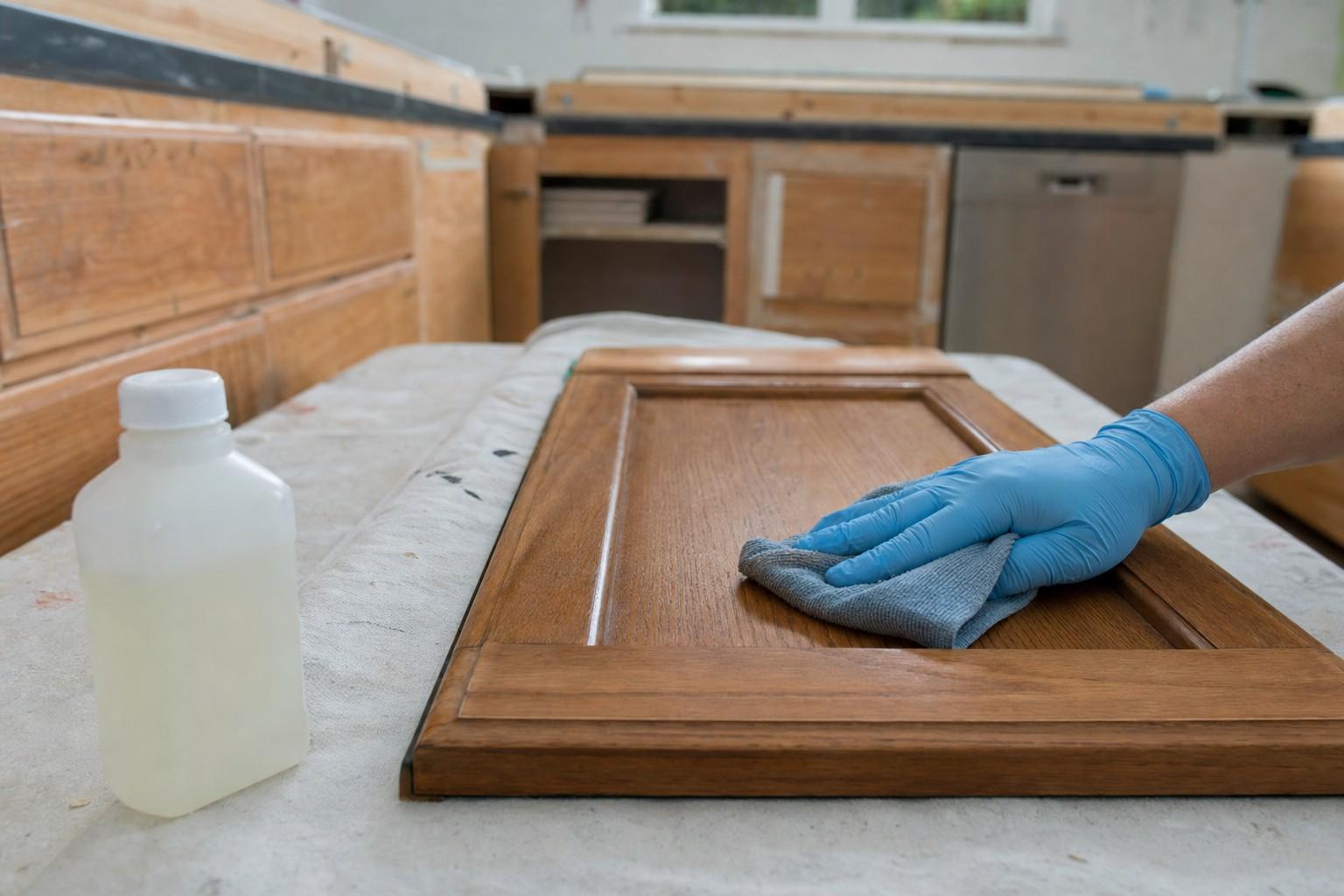
Wipe it on with a rag or an applicator pad, working with the grain. It cuts the old sheen so a bonding primer has something to grip.
There is no dust, no sanding block, and no cleanup before you prime.
One honest limitation: it does not clean grease. If the kitchen sees a lot of cooking, wipe cabinets down with a degreaser first. Or reach for one of the combo picks below.
Krud Kutter Gloss-Off (best cleaner and deglosser combo)


Krud Kutter Gloss-Off does two jobs in one wipe. It cleans and deglosses in the same pass, built specifically for cabinets, trim, and doors.
That combination earns its keep on cabinets that see daily cooking, where grease and old gloss build up together.
The limitation: it does more than a plain deglosser. That can feel like overkill on cabinets that are already clean and just need the sheen knocked down.
Sunnyside M-1 Paint Deglosser and Pre-Paint Cleaner (best for a grimy kitchen)

A grimy kitchen needs more than a wipe of deglosser. It needs a real pre-paint cleaning step first.
Sunnyside M-1 combines that pre-paint clean with the deglossing pass, so grease, dust, and old sheen all get handled together.
It is a solid pick for a kitchen that has gone years between paint jobs, where cabinets carry more than just gloss.
Limitation: on a very heavy, decades-old oil-based finish, a light scuff sand on top of this pass still helps primer bite.
TruCleanEX No-Rinse Paint Deglosser (best no-rinse formula)

Wipe it on, let it work, and move straight toward primer once it flashes off. No rinse step means no standing around between deglossing and priming.
That makes it the pick for a weekend project where you want doors ready to prime the same day.
One limitation: it is a smaller brand than the other three picks here. Check stock before you plan a whole kitchen around it.
How to use a deglosser on cabinets
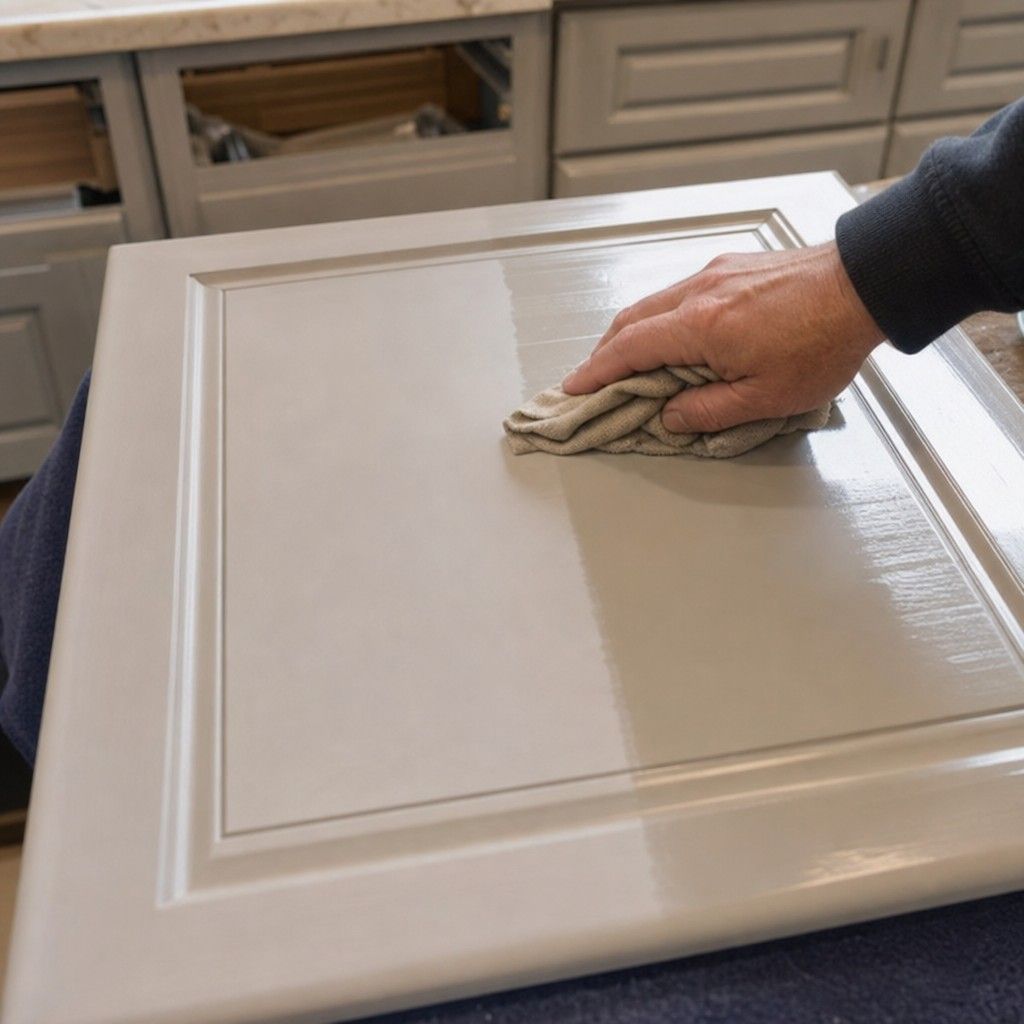
None of these four picks need a single pass of sandpaper on a cabinet that is already painted or factory finished.
The process stays the same across all four:
- Remove doors, drawer fronts, and hardware. Label each one with tape so it goes back in the right spot.
- Wipe down greasy surfaces with a degreaser first, unless your pick is already a cleaner and deglosser combo.
- Apply the deglosser with a rag, sponge, or applicator pad, following that product’s own directions.
- Work in a well-ventilated space, or run a fan. These are strong solvent products.
- Wipe off or let it flash off, depending on the product. The surface should feel dull, not slick.
- Move straight to a bonding primer once it is dry. No sanding step in between.
When a deglosser is not enough
A deglosser solves one problem: gloss. It is not a fix for everything a cabinet job can throw at you.
Heavy grease needs a degreaser first. A plain deglosser dulls sheen, it does not cut through years of cooking grease. Clean first, or pick one of the combo products above.
Deep, old oil-based gloss can still want a light scuff. Some factory or decades-old oil finishes are thick enough that a scuff sand on top of deglossing helps primer bite harder.
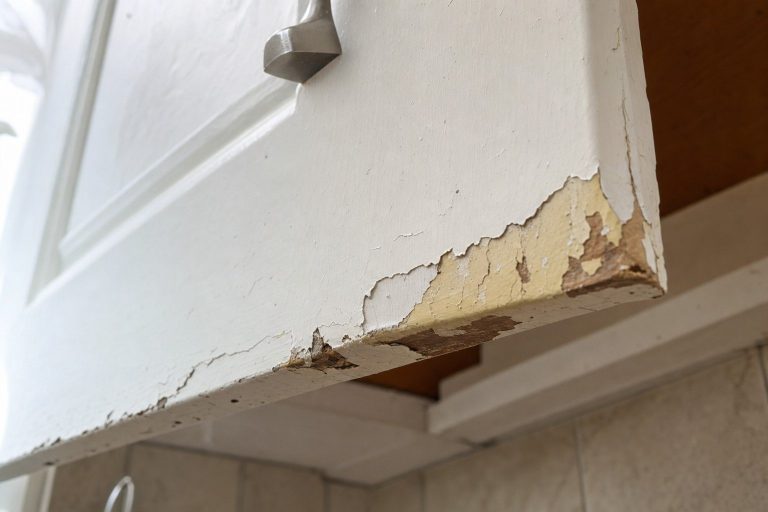
A peeling or failing finish needs more than deglossing. If paint is already chipping or lifting off the wood, deglosser will not fix that. Scrape or sand the loose sections first, then degloss what remains.
Two situations mean you can skip buying one at all. Raw or unfinished wood cabinets have no sheen to cut, so a deglosser does nothing there. Cabinets that are already dull or matte do not need one either.
How to choose a cabinet deglosser
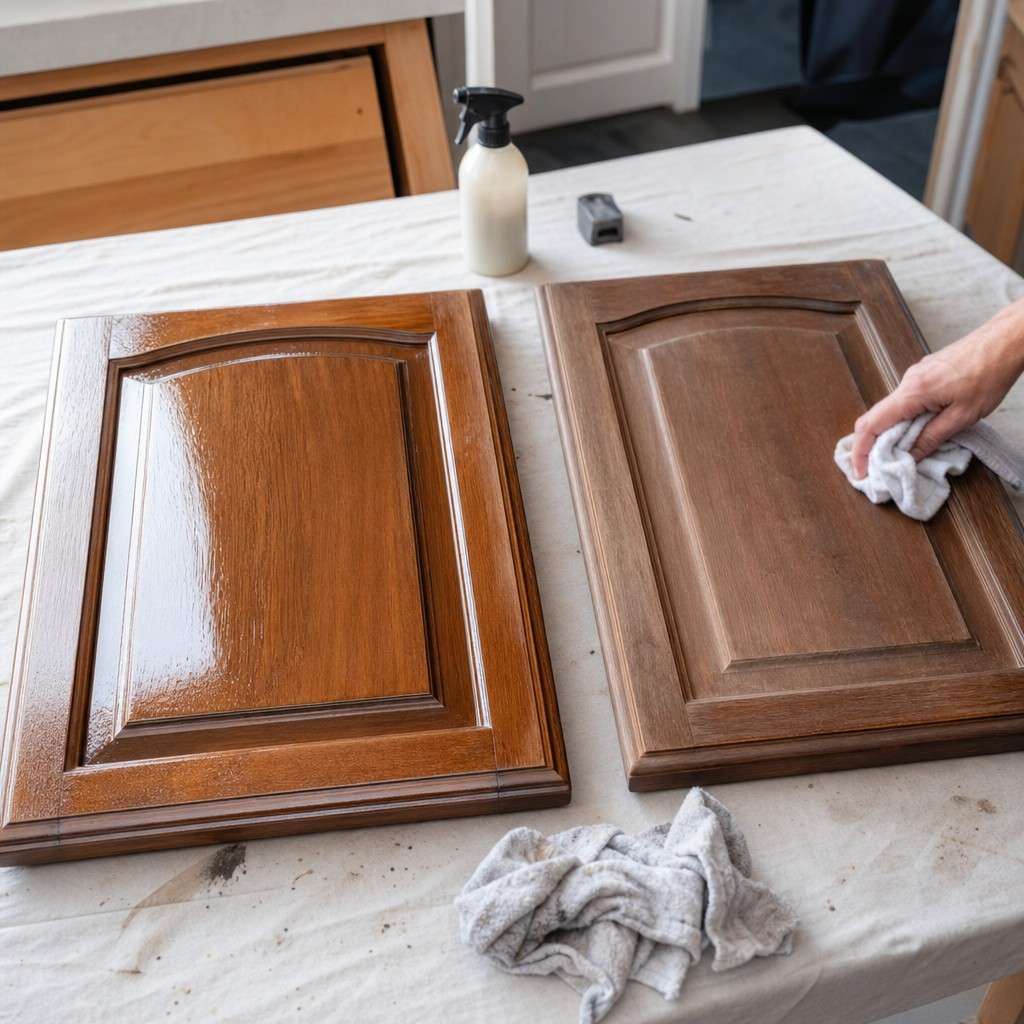
Match the pick to the kitchen, not the other way around.
- Greasy kitchen: a combo product like Krud Kutter Gloss-Off or Sunnyside M-1 cleans and deglosses in one pass.
- Already-clean cabinets: a straight deglosser like Klean Strip is enough, since you are only cutting gloss.
- Want it done same day: a no-rinse formula like TruCleanEX skips the follow-up rinse step.
- Old, heavy oil-based gloss: plan on a light scuff sand after deglossing, on top of whichever product you pick.
Every product on this list is a solvent. Open a window or run a fan no matter which one comes home with you.
Frequently asked questions
Do I really not need to sand at all?
On most factory or previously painted cabinets in decent shape, no. A light scuff sand only comes back into play on stubborn, old oil-based gloss.
Will a deglosser clean grease too?
Only the combo products do both. A straight deglosser just cuts gloss, so degrease first if the kitchen sees a lot of cooking.
Do I still need primer after deglossing?
Yes. Deglossing preps the surface so primer can grip. It does not replace priming, and skipping primer means the paint will not hold up.
Bottom line
The Klean Strip Easy Liquid Sander Deglosser is the pick for most cabinet jobs. Cheap, simple, and exactly what liquid sandpaper was built to do.
Reach for Krud Kutter Gloss-Off or Sunnyside M-1 when the kitchen is genuinely greasy. Reach for TruCleanEX when you want the whole prep step done in one afternoon.
Whichever one you pick, deglossing gets you to primer without a single sheet of sandpaper. That is the whole point of skipping the sanding step before painting cabinets.